

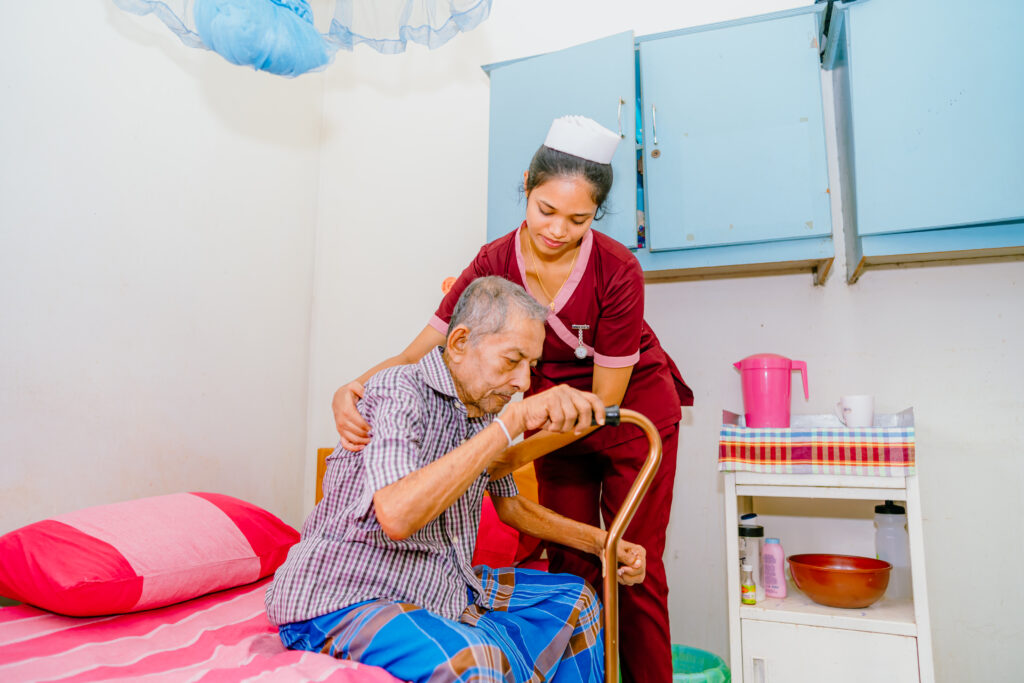
Professional 24-hour nursing care for elderly parents in Sri Lanka bridges the gap between family dedication and medical expertise needed during overnight hours when most senior emergencies occur. Elder care facilities like Jude Elder Care Home in Negombo provide trained geriatric nurses, medication management, and round-the-clock monitoring that prevents falls and health crises—often at comparable cost to home care when factoring in hospitalizations and lost income. Residential elder care strengthens family bonds by transforming exhausting medical management into quality time together.
When Good Intentions Aren’t Enough
Quick question: What time did you last check on your elderly parent?
Now here’s what keeps families up at night—between that check-in and your next one, serious health events can unfold silently. Blood pressure can spike or plummet. A moment of dizziness can lead to a devastating fall. Medication timing gets confused, creating dangerous interactions. And often, no one discovers what happened until morning.
Most Sri Lankan families are doing everything they know how to do. But there’s a gap between dedication and medical expertise that puts our parents at risk.
The Reality Between Bedtime and Breakfast
Your mother goes to bed at 9:30 PM. You help her settle in, give her evening medications, make sure she’s comfortable. Everything seems fine. You go downstairs, catch up on work emails, finally get to bed yourself around midnight.
At 3 AM, she wakes feeling unsteady—her blood pressure medication is affecting her more than usual tonight. She needs to use the bathroom. Gets up slowly, reaches for her walker, but misjudges the distance. She falls, hitting her hip against the bedframe. The pain is sharp, but she’s too disoriented to call for help effectively.
You discover her at 6:45 AM when you come with her morning tea. Nearly four hours have passed.
This happened to a family in Colombo last month. To another in Kandy three weeks ago. It’s happening in homes across Sri Lanka right now—not because families don’t care, but because elderly health crises don’t wait for convenient hours.
Take an Honest Assessment
Consider your parent’s current situation:
Are they managing four or more medications with different schedules? Do they have diabetes, heart disease, or respiratory conditions that need monitoring? Have they experienced even one fall in the past six months? Do they seem confused or forgetful, particularly in evening hours? Are you constantly anxious about their safety when you’re not in the same room?
If these questions resonate, understand this: medical needs don’t pause overnight. The hours between your last check-in and morning are when many elderly emergencies actually develop—and when intervention makes the biggest difference.
What Professional Night Monitoring Actually Prevents
At Jude Elder Care Home, our nursing staff conducts scheduled rounds every two hours through the night. This isn’t excessive caution—it’s what years of geriatric care have taught us is necessary.
Last month, our night nurse noticed during her 2 AM round that a 78-year-old resident’s breathing seemed different—slightly more labored than usual. She checked oxygen saturation levels immediately: they’d dropped to 89%, below the safe threshold. She adjusted the patient’s position, elevated her head properly, started supplemental oxygen, and monitored closely. Within twenty minutes, levels normalized. She documented everything for the morning doctor review.
The woman’s son, who visits every Saturday afternoon, never knew this happened. Not because we hid it, but because trained intervention prevented it from becoming an emergency worth calling about.
Compare this to the same scenario at home. Oxygen levels drop at 2 AM. Everyone is sleeping. No one is checking. By 7 AM when someone notices the breathing difficulty, you’re rushing to the emergency room in crisis mode. What could have been a simple adjustment becomes a hospital admission, possibly ICU care, with all the associated trauma and cost.
That’s the fundamental difference between having family nearby and having professional medical supervision.
The Hidden Cost of Home Management
Let’s discuss money honestly, because that’s usually the first concern when families consider residential elder care.
Right now, you’re probably spending Rs. 35,000-45,000 monthly on a daytime helper, medications, doctor visits, and medical supplies. Compared to facility care costs, that seems more affordable.
But calculate what you’re not counting:
The emergency hospitalization two months ago—Rs. 85,000. Your sister who reduced her work hours to help during weekdays—Rs. 60,000 monthly in lost income. Medications that get duplicated or wasted because tracking is inconsistent. The wheelchair and hospital bed you purchased but no one quite knows how to adjust properly. Your own visits to the doctor for stress and exhaustion.
Then there’s one accountant’s story from Colombo. He was managing his 81-year-old father’s care at home. “I thought I was saving money,” he told me during his father’s admission consultation. “When I actually calculated everything—the helper’s salary, my lost consulting income from leaving work early constantly, three emergency hospital visits in six months, my own blood pressure medication because the stress was killing me—I was spending Rs. 95,000 a month and my father was declining anyway. I was paying more for worse outcomes while destroying my own health.”
Professional care isn’t always more expensive than home care—it’s usually more cost-effective while delivering dramatically better medical supervision.
How Daily Life Actually Changes
Your current reality:
Wake up around 5:30 AM already anxious. Immediately go check if your parents are okay. Figure out which medications are due—was it the white pill or the blue pill before breakfast? Help them to the bathroom, heart pounding with worry they’ll slip. Prepare breakfast while taking work calls. Check blood sugar levels—is 180 too high? Should you call the doctor? Rush to get ready for work, already exhausted. Keep your phone volume high all day, dreading emergency calls.
With professional care:
Wake up normally. Have your morning tea in peace. If you want an update, call the facility—staff will tell you your parents slept well, took all scheduled medications, had blood sugar checked at 6 AM (readings normal), enjoyed breakfast, and are now in the garden with other residents. Visit during your lunch break if you’re nearby, or come after work for dinner. Have an actual conversation about their memories, their friends, their activities—not just medical management. Sleep through the night without listening for falls.
The transformation isn’t just for your parents—it’s for you too. You get to be a daughter or son again, not an undertrained, overwhelmed caregiver.
The Training Gap No One Talks About
Be honest: Can you recognize early stroke symptoms versus general fatigue? Do you know what dangerously low blood sugar looks like in an elderly person? Can you properly manage medication interactions? Do you know how to reposition someone with limited mobility to prevent pressure ulcers?
Most family members can’t. That’s completely normal—these are specialized clinical skills requiring years of training.
One of our registered nurses with 12 years in geriatric care explains: “Family members see their parents are more tired than usual and think they just need rest. I see that same tiredness and immediately check if it’s a medication side effect, possible infection, electrolyte imbalance, or cardiac issue. Each requires different intervention. That clinical assessment ability—that comes from education and experience, not from love and vigilance.”
Our staff notices that one resident’s appetite has decreased for two days—which indicates potential medication adjustment needed. That another is taking slightly shorter steps—fall risk is increasing. That a third seems less engaged in activities—possible early UTI or depression indicator.
These subtle changes go unnoticed when you’re juggling work, your own family, household management, and elderly care. They’re obvious to professionals whose full-time job is geriatric observation. Learn more about our experienced caregiving team and their specialized training in elderly care.
What Really Happens During “Safe” Night Hours
Most families assume nights are straightforward—everyone sleeps, minimal risk. Let me show you what actually happens during a typical overnight shift at our Negombo facility:
10:30 PM: Evening medications completed. Residents settled for sleep. Night nurse conducts shift handover with evening staff, reviews any changes in condition noted during dinner hours.
12:45 AM: First night round. The nurse notices a 75-year-old resident seems restless, touching his chest repeatedly. Quick vital signs check: slight fever (99.8°F), elevated pulse. She doesn’t panic—these could indicate many things. She increases monitoring to every 30 minutes, documents carefully, ensures it’s flagged for doctor review at 8 AM rounds.
2:20 AM: Call bell from an 82-year-old resident—she needs bathroom assistance. Staff member is there within 45 seconds. Safe transfer using proper technique, no rushing, maintains dignity. Back to bed comfortably. No fall, no incident.
3:50 AM: Second full round. Scheduled blood sugar check for a 71-year-old resident with type 2 diabetes. Reading is 72—lower than his usual range. The nurse provides measured glucose supplement per protocol, rechecks in 15 minutes (now 95—safe), documents for morning insulin adjustment discussion with doctor.
5:30 AM: During early morning round, the nurse notices a 79-year-old resident has been to the bathroom three times overnight—unusual for her. Quick assessment reveals early UTI symptoms. Documentation completed, morning doctor notified immediately when shift starts, urine sample collected for lab testing before symptoms worsen.
7:00 AM: Day nurse arrives. Night nurse provides detailed handover on the four residents who needed extra attention overnight. Morning routine begins with everyone safe.
None of these residents’ families received late-night phone calls. Not because we’re hiding problems, but because trained professionals managed everything appropriately before situations became emergencies.
Now imagine those same scenarios at home with everyone sleeping:
The man’s chest discomfort and fever go unnoticed until morning—by then he’s significantly worse, possibly heading to cardiac crisis. The woman tries reaching the bathroom alone at 2 AM, falls, lies there unable to get up, developing bruising and possible fracture. The diabetic man’s low blood sugar causes confusion or loss of consciousness. The woman with early UTI symptoms has her infection progress for days before anyone recognizes it—by then she needs IV antibiotics and hospitalization.
That’s not a horror story—that’s the predictable outcome of untrained overnight supervision versus professional medical monitoring.
The Questions That Actually Matter
Stop asking “Can we afford professional care?” and start asking: Can we afford another serious fall? Another preventable emergency admission? Another medication error with consequences? Can I afford to keep functioning on fractured sleep and constant anxiety?
Stop asking “Will my parent adjust to a facility?” and start asking: Is my parent actually thriving at home right now, or just surviving? Are they getting social interaction, mental stimulation, proper nutrition, emotional support? Or are they isolated, declining, depressed?
Stop asking “What will relatives think?” and start asking: Am I making this decision based on cultural guilt and others’ opinions, or based on what’s genuinely best for my parent’s safety, health, and quality of life?
These are difficult questions. But they’re honest ones—and honesty is what your parents deserve.
What Quality Care Actually Delivers
Professional elder care isn’t just medical monitoring—though that’s critical. It’s creating an environment where elderly people don’t merely survive, they actually live with dignity and purpose.
A 76-year-old woman came to us eight months ago after a fall at home left her with a fractured wrist and shattered confidence. Her daughter describes the transformation: “Amma stopped wanting to do anything. She wouldn’t even watch her favorite teledrama. She barely spoke, picked at her food, seemed to be just… giving up. I thought bringing her here meant she’d given up on life.”
Today, this woman teaches traditional kavum-making to other residents every Thursday. She’s joined our morning walking group. She’s started writing down family recipes in a notebook. Last month, she corrected our cook’s kukul mas curry technique—with a smile.
What changed? The consistent medical supervision gave her physical stability and confidence. The social environment gave her purpose and friendship. The relief from feeling like a burden to her children gave her permission to enjoy life again.
Her daughter visits twice weekly now. “When I visit, we actually talk,” she says. “About her childhood, about my kids, about the recipe book she’s making. We’re not talking about pills and blood sugar anymore. I have my mother back—not as a patient, but as my Amma.”
Explore our wellness programs and daily activities that help residents thrive, not just survive.
The Cultural Conversation We’re Avoiding
Sri Lankan families carry enormous guilt around residential elder care. We’re raised with powerful cultural messages about duty and keeping parents at home. Moving a parent to professional care feels like abandonment, like betraying tradition and family values.
But here’s what I’ve observed working with over 200 families at Jude Elder Care Home: The families with the strongest, most genuinely loving relationships with their elderly parents are often the ones who’ve made the difficult choice to seek professional help.
A 52-year-old son resisted moving his mother to our facility for eighteen months. “I felt like a failure,” he admits. “Like everyone would judge me. Like I was abandoning Amma after everything she did for me.”
His mother, 84 years old, had different feelings: “I knew I was becoming a burden. I could see my son getting exhausted, his wife stressed, even the grandchildren avoiding coming over because our home became like a hospital. I felt guilty every single day.”
Six months after the move, both their perspectives have shifted. “I see Amma three times a week now,” the son says. “When I visit, I’m actually present. We talk, we laugh, sometimes I bring the grandchildren and we all have lunch together. The staff tells me when there’s anything medical I need to know, but I’m not managing every single pill and symptom anymore. Our relationship is better now than it’s been in years—because I’m her son again, not her nurse.”
His mother adds: “I have friends here. We play cards, we share stories. The nurses know exactly what I need. I don’t worry about falling because I know someone will find me quickly. And when my son visits, I can see he’s not exhausted anymore. That makes me happy.”
This is what honoring your parents actually means—ensuring they receive expert medical care while you maintain the emotional relationship that matters most. Cultural duty isn’t about doing everything yourself; it’s about ensuring your parents are safe, healthy, and valued.
Making This Decision
If you’re reading this recognizing your own situation clearly for the first time, you’re probably feeling overwhelmed. That’s completely normal. This is one of life’s most difficult decisions, and no one wants to make it.
Start by visiting facilities—not just looking at websites, but actually showing up. Tour at different times: morning activities, lunch service, afternoon rest periods, evening social time. Pay attention to how staff interact with residents during routine moments, not just during scheduled tours.
At Jude Elder Care Home, we actively encourage scrutiny. Ask to meet the nursing team. Question staff qualifications, nurse-to-resident ratios, emergency protocols, how medication errors are prevented. Request to speak with other families. Observe genuine daily interactions.
Bring a checklist. Quality facilities aren’t offended by tough questions—we welcome them because we’re confident in our standards of care. See our comfortable living spaces and care environment to understand what quality residential elder care looks like.
One family member visited seven facilities before choosing ours for his father. “I showed up unannounced at 2 PM on a Tuesday,” he says. “I wanted to see the real operation, not a rehearsed tour. What I saw was staff who knew every resident by name, who were patient during lunch service, who treated my father with respect during the assessment—not talking over him but to him. That’s when I knew.”
Moving Forward
Your parents deserve medical supervision that keeps them safe around the clock. You deserve to sleep through the night without anxiety. Both of you deserve a relationship centered on love and connection, not just medical management.
Professional nursing care isn’t abandoning family responsibility—it’s being smart enough to combine family love with professional expertise.
The families who wait until after a major crisis always say: “I wish we’d done this sooner. I didn’t realize how much danger we were in.” The families who make the transition proactively say: “I didn’t realize how much stress we were living with until it was gone.”
Connect With Jude Elder Care Home
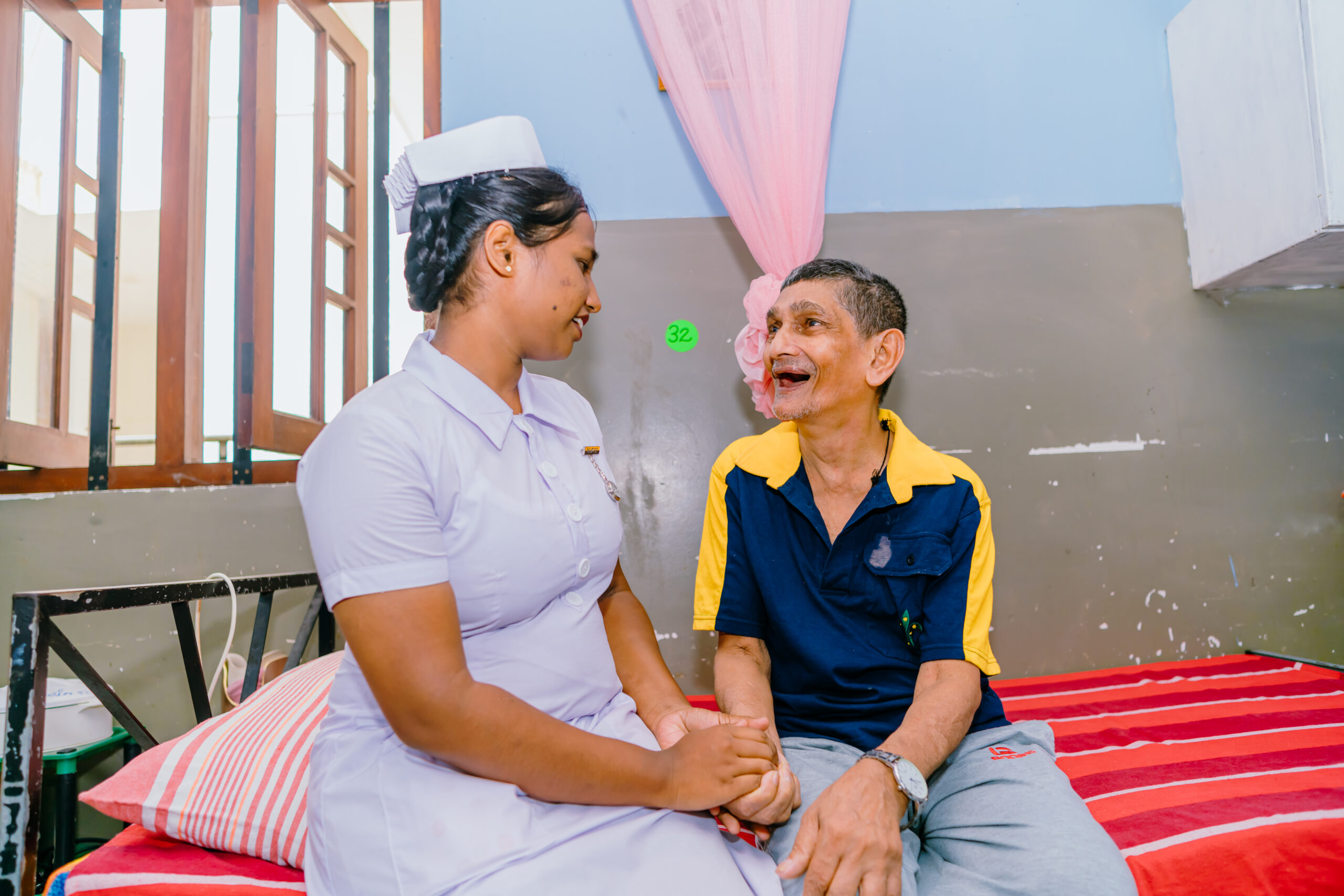
Ready to explore whether 24-hour professional medical supervision makes sense for your family? Want to see what quality elderly care actually looks like in practice?
Contact Jude Elder Care Home in Negombo to schedule a personal facility tour and honest consultation about your parent’s specific needs. No pressure, no sales pitch—just straight talk about what your parent requires and whether we’re the right fit.
Visit during times that work for your schedule. Ask every question on your mind. Meet our staff. Talk to other families. Make an informed decision about your family’s future.
Call us or visit our website to arrange a tour that could change everything for both you and your parent.
Common Questions About 24-Hour Elderly Care
How do I know if my parents really need 24-hour nursing care or if I’m overreacting?
You’re not overreacting if your parent has experienced even one fall in the past year, manages four or more medications daily, has chronic conditions requiring monitoring (diabetes, heart disease, respiratory issues), shows any confusion particularly during evening or night hours, or if you’re constantly anxious about their safety when not directly supervising them.
The clearest indicator? When you’re losing sleep listening for problems, when the primary family caregiver is experiencing burnout, or when your parent has had any medical emergency that proper monitoring could have prevented.
24-hour nursing care becomes essential when medical needs exceed what untrained family members can safely manage—even with the best intentions. At Jude Elder Care Home, we offer honest assessments to help families understand appropriate care levels. Sometimes families are managing adequately; sometimes they’re one crisis away from disaster and don’t realize it until something serious happens.
What’s the real difference between hiring a full-time helper at home versus care at a professional facility?
A hired helper provides valuable companionship and basic assistance, but typically lacks medical training to recognize dangerous symptom changes, properly administer complex medication regimens, respond correctly to emergencies, or implement proper care techniques for conditions like diabetes or heart disease.
At a professional elder care facility, you receive registered nurses conducting regular rounds throughout the night, immediate medical response with proper equipment and protocols, coordination with doctors and specialists, specialized care for complex conditions, and fresh, alert staff every shift rather than one increasingly exhausted person.
One family learned this distinction the hard way: “Our helper was wonderful—kind, reliable, my father liked her. But when his blood sugar dropped dangerously at night, she panicked and gave him regular juice, which caused it to spike too high. She didn’t know the proper protocol. The next incident was worse. That’s when I realized good intentions can’t replace medical training.”
Home helpers are wonderful for companionship and daily living assistance, but they cannot replace structured nursing services that prevent emergencies rather than just reacting to them.
Will moving my parents to a care facility damage our relationship?
Many families fear this, but the opposite typically happens. When you’re not exhausted from caregiving responsibilities you’re not trained for, you actually have energy for genuine emotional connection.
Visits transform from stressful medical management to quality time—sharing meals, telling stories, looking at old photos, just being together. At Jude Elder Care Home, we actively encourage frequent family visits and involvement in activities.
One son, whose 79-year-old mother has been with us for fourteen months, explains: “When Amma lived with us, every interaction was about medications, doctor appointments, preventing falls. I was stressed, she felt guilty. Now when I visit on Wednesdays and Sundays, we actually enjoy each other. We watch her favorite shows together, I bring the grandchildren, and we celebrate birthdays here. She’s happier, I’m healthier, and our relationship is better than it’s been in five years.”
Your parents also benefit from relief from feeling like a burden, social interaction with peers, professional care that helps them feel safer, and often improved physical health from proper medication management and nutrition.
How much does professional elderly care actually cost compared to managing everything at home?
While residential care costs vary based on medical needs and level of supervision required, most families discover they’re already spending more than they realize when you honestly calculate everything:
- Lost income from reduced work hours or family members who’ve stopped working
- Emergency hospital visits from preventable incidents (one hospitalization often equals months of professional care)
- Wasted medications from management errors and confusion
- Equipment purchased but barely used correctly
- Stress-related health costs for family caregivers
- Transportation for medical appointments
- Home modifications and safety equipment
One family calculated their actual costs: “I thought we were spending Rs. 40,000 monthly. When I actually tracked everything over three months—my reduced consulting work, two emergency visits, my brother’s transportation costs helping out, my own sleeping pills and anxiety medication—we were spending Rs. 88,000 monthly and my mother was declining anyway.”
Senior care facilities provide comprehensive packages that include not just nursing services but also meals, accommodation, social activities, and access to specialized medical equipment without separate rental fees. When comparing costs, families often focus only on the helper’s salary versus facility fees, missing the complete picture. At home, you’re separately managing grocery shopping for special dietary needs, cooking appropriate meals, paying utility bills for the extra room and increased usage, purchasing and maintaining medical equipment like oxygen concentrators or hospital beds, arranging transportation for medical appointments, and organizing social engagement.
Professional facilities bundle all of this into one predictable monthly cost. Three nutritious meals daily prepared by staff who understand diabetic and cardiac diets. Round-the-clock nursing supervision. Activities and social programs. Access to wheelchairs, walkers, blood pressure monitors, and oxygen equipment as needed. Emergency medical response. Housekeeping and laundry. Even basics like bed linens and toiletries are included.
The value proposition becomes dramatically clearer when all these elements are considered together rather than comparing only one aspect of care.
Quality nursing services at residential facilities provide comprehensive medical supervision, meals, activities, emergency infrastructure, and trained staff at rates that usually represent better value than fragmented home care arrangements.
For a detailed breakdown of what professional elderly care actually costs in Sri Lanka—including transparent pricing ranges, what’s included versus what costs extra, and how to accurately compare facility costs with your true home care expenses—read our comprehensive guide on private nursing home costs in Sri Lanka.
Before making any decision, use a comprehensive facility evaluation checklist to assess what different care options actually provide. This systematic approach helps you compare facilities fairly and identify which services matter most for your parent’s specific needs. Contact us for transparent pricing discussions based on your parent’s specific medical situation.
Can I visit my parent anytime at Jude Elder Care Home, and how involved can families be?
Absolutely—family involvement is essential, not optional. We maintain flexible visiting hours (7 AM to 8 PM daily) because we understand families want to stay deeply connected.
You can join your parents for meals, participate in activities together, attend care planning discussions, receive regular health updates, and stay involved in their daily life. Many families visit during lunch breaks, after work, or spend entire Sundays here. Some come daily, others twice weekly—we support whatever works for your family.
We provide monthly care meetings where you can discuss your parent’s health status, any concerns, and care plan adjustments. We’ll call you for any significant medical changes or if your parents specifically ask for you. Some families have WhatsApp groups with our staff for quick updates and photo sharing.
One son visits his father every Tuesday and Thursday evening: “I know exactly what Thaththa does every day. The staff tells me he’s teaching the other residents chess, that he’s eating well, that his blood sugar is stable. When I visit, I actually enjoy the time—we play cards, we talk about cricket, we’re just father and son again.”
Professional care supports family bonds rather than replacing them. You’re welcome anytime to see exactly how we care for your parents, and we actively encourage that transparency because we’re confident in the compassionate, expert care our team provides every single day.
