Choosing the best elder care home in Sri Lanka comes down to seven practical checks — your parent’s actual care needs, the facility’s registration status, what you observe during an in-person visit, staff qualifications, emergency medical protocols, family visiting policies, and genuine value for the monthly fee. Families researching Sri Lanka best elder care options often find that the right answer isn’t the biggest or the cheapest facility — it’s the one that’s honest with you at every step. Walking through this checklist before you sign anything helps the whole family arrive at a decision you can feel settled about, not rushed into.
Why This Decision Feels So Heavy — And Why That's Normal
If you’re reading this, someone you love probably needs more daily care than your household can safely manage. In Sri Lankan culture, where looking after ageing parents has always been seen as both a duty and an honour, even considering a care home can bring on guilt that has little to do with how much you love them. That guilt is worth naming — it isn’t really about love, it’s about change, and change involving our elders was never meant to be decided alone or in a hurry.
Why Are More Sri Lankan Families Turning to Institutional Elder Care?
The honest answer is demographics. Sri Lanka now has one of the fastest-ageing populations in Asia: the share of people aged 60 and above rose from around 12% in 2012 to 18% by 2024, and is projected to reach roughly one in four Sri Lankans by 2040, according to figures shared by the Health Promotion Bureau. At the same time, more adult children now work abroad or hold demanding jobs far from home. For many families, institutional care isn’t replacing family care — it’s becoming part of it, alongside regular visits and involvement in care decisions.
What Makes the Best Elder Care Homes in Sri Lanka Stand Out
Not every facility that advertises itself as a “care home” offers the same standard of safety or medical oversight. With still a limited number of properly regulated facilities across the country, finding the best elder care in Sri Lanka takes a bit of effort. The best elder care homes in Sri Lanka tend to share a few things in common: proper registration with recognised bodies, trained nursing staff around the clock, a doctor who actually visits rather than one who simply signs paperwork, and an atmosphere where residents look genuinely cared for — not just housed.
Here is the 7-step checklist, with what to look for and why each step matters.
Quick-Reference Checklist
Step | What to Check | Why It Matters |
1. Define care needs | Mobility, memory, medical conditions | Matches your parent to the right level of care |
2. Verify registration | Government and council certification | Confirms legal accountability and basic safety standards |
3. Visit in person | Cleanliness, smell, residents’ mood | Photos and brochures don’t show daily reality |
4. Check staff and doctor access | Nurse-to-resident ratio, medical visits | Determines the quality of everyday care |
5. Ask about emergencies | On-call doctor, nearest hospital, response plan | Safety when something goes wrong at 2 a.m. |
6. Understand visiting policy | Visiting hours, involvement in care plans | Keeps your loved one connected, not isolated |
7. Compare value | What’s included in the monthly fee | Avoids surprise costs later |
Step 1: Start by Defining What Kind of Care Your Loved One Actually Needs
Before comparing facilities, be honest as a family about the level of support needed. Can your parent walk independently, or do they need help moving around? Is there a memory condition like dementia involved? A facility that’s wonderful for an active, independent senior may not be equipped for someone bedridden or living with advanced dementia, and the reverse is also true. Getting this clear early saves you from touring homes that were never going to be the right fit.
Step 2: Check Registration and Licensing — Don’t Skip This
A genuine elder care facility in Sri Lanka should be registered with the National Council for Elders and the relevant Provincial Department of Social Services. These registrations exist so families have assurance the facility meets basic safety standards.
How Do You Know If an Elder Care Home Is Properly Registered?
Simply ask. A facility confident in its standards shares its registration numbers without hesitation. Jude Elder Care Home’s services, for example, are registered under the National Council for Elders (Reg. No.: NSE/WP/G/2021/06) and the Western Provincial Department of Social Services (Reg. No.: WP/SSD/G/EH/2012/06) — the kind of detail worth asking for wherever you look.
Step 3: Visit the Facility Yourself — Don’t Decide From a Website Alone
Photographs can make any space look pleasant. A personal visit tells you what images can’t: whether rooms are clean and well-ventilated, whether there’s any lingering smell of neglect, and — most tellingly — how residents actually look and behave. Are they engaged and comfortable around staff, or withdrawn and anxious? Spend time in the common areas, not just the room you’re shown first.
Step 4: Look Closely at Staff Numbers and Medical Qualifications
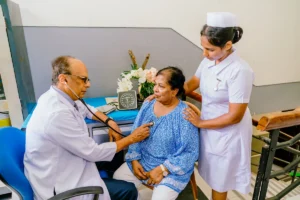
Ask how many caregivers are on duty per shift, and whether a doctor is genuinely involved in day-to-day care rather than an occasional consultant. Homes led by a qualified, hands-on medical director tend to catch health issues earlier. Any reputable home should answer this openly.
Step 5: Ask How Medical Emergencies Are Handled
Falls and sudden illness are a real risk for elderly residents — research on ageing in Sri Lanka shows falls among older adults are increasingly recognised as a serious medical concern, not a minor accident. Ask what happens if a resident’s condition worsens suddenly: is there an in-house plan to stabilise them, how quickly can they reach a hospital, and how are families notified?
Step 6: Understand the Home’s Approach to Family Involvement and Visiting
What Should You Ask About Visiting Hours and Family Involvement?
Ask for exact visiting hours, whether there’s flexibility for special occasions, and how the team supports families based overseas. A trustworthy home will have clear daily visiting windows — a morning and an afternoon slot is fairly standard — and should be willing to arrange video calls for relatives who can’t visit in person. If a facility is vague or discouraging about visits, treat that as a warning sign.
Step 7: Compare Total Value, Not Just the Lowest Price
It’s tempting to choose based on the cheapest monthly fee, but that can be a costly mistake. Look at what’s actually included — meals, laundry, 24-hour nursing supervision, and routine doctor consultations should be part of a transparent package, with extras like medicines or specialist consultations clearly explained upfront. The best care homes for elders in Sri Lanka are the ones that treat pricing the same way they treat care: honestly and without hidden conditions.
Jude Elder Care Home: An Example of What This Checklist Looks Like in Practice
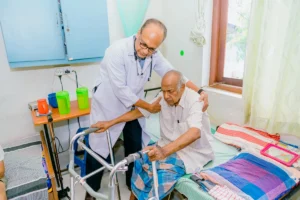
For 18 years, Jude Elder Care Home in Negombo has cared for elderly residents in a calm, garden-filled setting, practical for families travelling from Colombo, the airport, or overseas. The home is medically led by Dr. Tilak Silva, a fully qualified MBBS doctor with over 30 years of experience and postgraduate diplomas in Family Medicine and General Practice from the University of Colombo and the College of General Practitioners.
- Staff and residents: 20+ trained caregivers currently support more than 70 residents, including those living with dementia and bedridden residents needing more intensive support.
- Visiting hours: Mornings 9:30–11:00 a.m. and afternoons 3:30–5:30 p.m., daily, with video calls arranged for families abroad.
- Admission process: Families are guided through documentation and an initial assessment, with overseas coordination handled remotely.
- What’s included: Meals, tea, laundry, 24-hour nursing supervision, and regular doctor consultations are part of a transparent package, so families know what they’re paying for.
This isn’t meant to suggest every family’s right answer is the same facility — it’s an example of how the checklist above translates into daily reality at one home.
Looking for the Best Elder Care Home in Colombo? Worth Considering Negombo Too
A lot of families start their search specifically for the best elder care home in Colombo, since it’s the most familiar area. Facilities within the city, though, tend to carry higher costs simply because of land and operating expenses. Areas just outside Colombo — Negombo among them, roughly 35 km north and minutes from the international airport — often offer comparable or stronger care at a more accessible cost, without daily city traffic. For families based in Colombo, or flying in from overseas, the short drive rarely matters once they see the facility in person.
Contact Jude Elder Care Home for Trusted Elder Care Services in Sri Lanka
If you’re at the stage of comparing options, the most useful next step isn’t reading more articles — it’s seeing a facility in person and asking your questions directly. Our team is happy to walk you through our elder care services in Sri Lanka and talk you through admission honestly, including for families coordinating from overseas.
Contact Jude Elder Care Home to schedule a facility visit and consultation — no pressure, just an honest conversation about what would genuinely work for your family.
Frequently Asked Questions
What should I look for when choosing the best elderly homes in Sri Lanka? Government registration, visible hygiene standards, a doctor genuinely involved in care, clear visiting hours, and a transparent breakdown of what the monthly fee covers versus what’s billed separately.
How much does elder care cost in Sri Lanka? Costs vary by facility, room type, and the resident’s medical needs. Rather than comparing headline prices, ask each facility what’s included versus billed separately, such as medicines or specialist consultations.
Is a registered elder care home in Sri Lanka safer than an unregistered one? Generally, yes. Registration with the National Council for Elders and the relevant Provincial Department of Social Services means a facility has met defined safety standards, and families have a body to refer concerns to.
Can family members visit anytime, or are there fixed visiting hours? Most well-run homes set fixed daily visiting windows, commonly a morning and an afternoon slot. Ask about flexibility for special occasions and support for relatives overseas, such as scheduled video calls.
What documents are usually needed to admit a parent to a care home in Sri Lanka? Requirements vary slightly, but most ask for identification, recent medical records, and details of ongoing conditions, followed by an initial assessment before confirming admission. Reputable homes guide you through this, including remotely if you’re overseas.