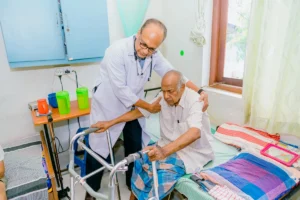
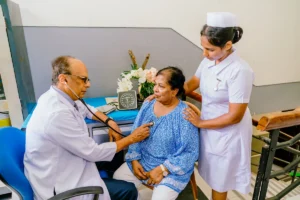
If you’re a Sri Lankan Canadian worrying about aging parents back home, you’re far from alone. Canada is home to over 136,000 Sri Lankan-born residents, concentrated mostly in Toronto and Montreal, and many face the same question: how do you provide reliable care for a parent across an ocean and a ten-and-a-half-hour time difference? This guide covers the realities of elderly care in Sri Lanka, how to vet a private elderly care home from abroad, expected costs, and how Jude Elder Care Home in Negombo supports Sri Lankan Canadian families through the process.
It’s 2 a.m. in Toronto and your phone buzzes. Your cousin in Colombo is calling to say your mother had a fall. There’s nothing to do from thousands of kilometres away but wait for updates and feel the guilt settle in. This plays out for countless Sri Lankan Canadian families every year. You’ve built a life in Canada, but caring for aging parents doesn’t stop mattering just because you’re not in the same country. The good news: elderly care in Sri Lanka has matured considerably, with reliable, medically supervised options for families who can’t be there in person.
The Unique Pressure Sri Lankan Canadians Carry
Caregiving in Sri Lankan culture has never been optional. It’s woven into religious values and family structure, and moving to Canada doesn’t erase that duty; distance tends to sharpen it. Academic research on transnational Sri Lankan families describes this as a genuine psychological burden that shapes decisions about staying abroad, visiting, or eventually returning home.
For the community, concentrated around Toronto’s Malvern area with a significant presence in Montreal, this shows up as constant worry about a parent living alone, reliance on neighbours who have their own lives, difficulty tracking conditions like diabetes or early dementia remotely, and guilt around the expectation that “good children” care for parents personally. None of this makes you a bad son or daughter. It makes you someone solving a hard problem, which is exactly where a well-run elderly care home in Sri Lanka becomes a sensible, loving decision rather than a last resort.
Why Demand for Professional Elder Care Is Growing
Sri Lanka has the highest proportion of older adults in South Asia, with close to 11% of the population already aged 60 or above, projected to climb past 22% by 2030. The ratio of working-age citizens to seniors is shrinking fast, leaving fewer relatives available for full-time caregiving even within the country, which is precisely why demand for registered, professionally staffed elderly care in Sri Lanka has grown so much over the past decade.
Comparing Your Elder Care Options
Most families start by asking a relative to “keep an eye” on a parent. It’s understandable, but rarely holds up once health needs increase:
Care Option | Best For | Key Consideration |
Family or relative care | Mild dependency, close family nearby | Unsustainable as needs grow |
Part-time home aide | Parents who want to stay home | Needs reliable hiring and supervision |
Private elderly care home | Regular medical needs, dementia, safety | Best for peace of mind; choose a registered facility |
Live-in nursing care | High dependency, post-surgery recovery | Costlier; suited to shorter recovery periods |
For most Sri Lankan Canadian families managing care remotely, a registered private elderly care home offers the most consistent, accountable solution once daily supervision or specialised nursing becomes necessary.
Evaluating a Care Home From Thousands of Kilometres Away
You can’t drop in unannounced from Canada, so vetting has to be deliberate.
Confirm Registration
Not every elderly home in Sri Lanka is formally registered. Facilities should be registered with the National Council for Elders and the relevant provincial Department of Social Services. Jude Elder Care Home, for example, holds registration with both the National Council for Elders (Reg. No. NSE/WP/G/2021/06) and the Western Provincial Department of Social Services (Reg. No. WP/SSD/G/EH/2012/06), details any family can verify independently.
Check the Medical Leadership
Ask who is clinically responsible for residents day to day. A facility led by a qualified physician, rather than one that calls a doctor only when something goes wrong, tends to catch problems earlier.
Ask Direct Questions First
Is nursing supervision available 24 hours a day? How are emergencies escalated? What’s the protocol for video calls? Is there a dedicated dementia programme? A trustworthy private elderly home in Sri Lanka will answer without hesitation.
Understanding the Cost of Care
One advantage many overseas families don’t anticipate: elderly care in Sri Lanka is considerably more affordable than comparable care in Canada, without necessarily compromising on quality at an established, registered facility. Private elderly care homes in Sri Lanka typically charge LKR 75,000 to 150,000 per month depending on room type and medical support, a fraction of long-term care costs in most Canadian provinces. For a fuller breakdown, this guide to private nursing home costs in Sri Lanka is a useful starting point. Compare full packages, not headline numbers: a quoted fee that excludes meals or medical consultations isn’t actually cheaper once those extras are added back in.
Staying Connected While Caring From Canada
Distance is easier to manage when communication is built into the routine rather than left to chance. Ask prospective facilities how they handle video calls, whether staff proactively update families, and whether there’s a single point of contact rather than a general office line. Many Sri Lankan Canadian families also appoint a trusted relative in Sri Lanka to act on their behalf for paperwork or urgent decisions.
Recognising When It’s Time
There’s often guilt attached to not caring for a parent personally, but choosing professional elderly care in Sri Lanka is an act of love, not abandonment, especially from another continent. Consider it when a parent is living alone without nearby support, showing early signs of dementia, managing a condition needing daily monitoring, or has had a fall that exposed a gap in support. At that point, the question isn’t whether to get help, but how to find the right place.
Quick Takeaways
- Sri Lanka has one of the highest proportions of older adults in South Asia, and demand for elder care is rising fast.
- Always confirm registration with the National Council for Elders before committing.
- A doctor-led medical team catches problems earlier and manages chronic conditions more consistently.
- Private elderly care homes in Sri Lanka are typically far more affordable than long-term care in Canada.
- Regular video calls and a named point of contact make remote caregiving genuinely manageable.
Frequently Asked Questions
How do I arrange elderly care in Sri Lanka while living in Canada?
Shortlist registered private elderly care homes and request a video call with the medical team. Reputable facilities are used to working with overseas families and can guide you through admission remotely.
What should I look for in a private elderly care home in Sri Lanka?
Formal government registration, a qualified doctor involved in daily care, 24-hour nursing supervision, clear communication for overseas families, and transparent, all-inclusive pricing.
Is elderly care in Sri Lanka more affordable than in Canada?
Generally yes, fees at established facilities are a fraction of long-term care costs in most Canadian provinces, though it’s important to compare full, itemised packages rather than headline prices.
How can I help my parent adjust to a care home from overseas?
Frequent video calls in the first few weeks help, as does involving your parent in the decision early and personalising their room with familiar items.
Does Jude Elder Care Home work with families in Canada?
Yes. It regularly supports Sri Lankan families overseas, including in Canada, with virtual tours, remote admission support, and regular video updates once a parent is settled.
Final Thoughts
Caring for aging parents from another country never feels entirely comfortable, and that’s a normal part of the transnational family experience, not a sign you’re doing anything wrong. What changes the outcome is finding a registered, medically accountable facility that treats your family’s distance as a logistics problem to solve, not an inconvenience to work around. Jude Elder Care Home has spent over 18 years building exactly that relationship with families across Canada, Australia, and the UK. If you’ve been going in circles, the next step doesn’t have to be complicated: reach out, ask every question on your list, and arrange a virtual walkthrough before deciding.
What’s been the hardest part of coordinating elder care for a parent from overseas? Share your experience in the comments, and pass this guide along to another Sri Lankan Canadian family who might be facing the same decision.
References
- Chandrarathne, U., Hettiarachchi, A., & Silva, O. (2024). Caring for elderly parents while living away: Sri Lanka’s professional and skilled emigrants. Migration research, SAGE Publications. journals.sagepub.com/doi/abs/10.1177/01171968241264907
- National Secretariat for Elders, Sri Lanka. srilankaeldercare.gov.lk